CASE STUDY
TrustClarity: Orchestrating Google Jules Multi-Agent Delivery on the Buyer Platform
IMPACT
Four signed merges into develop covering AGENTS.md plus three UAT fixes; one additional thumbnail/search fix with a TypeScript no-suppression governance lesson; durable signed-commit / pull-and-re-PR playbook confirmed across later Jules rounds
Production orchestration of Google Jules on the TrustClarity buyer platform — first and second UAT rounds, signed-commit re-PR playbook, prompt discipline, and AGENTS.md governance that kept parallel cloud sessions safe to merge.
IMPACT AT A GLANCE
4 PRs
Merged
Jules
Orchestration
Signed
Commits
TIMELINE
First production run 2026-06-29; second UAT round 2026-06-30; learnings through 2026-07-08
ROLE
Solo Full-Stack Consultant — Jules orchestration, prompt authoring, human review, signed re-commit, and repo governance
TEAM
Solo engagement with Google Jules cloud sessions
THE CHALLENGE
TrustClarity needed a repeatable way to clear buyer-platform UAT failures without slowing the human roadmap. Google Jules can clone a GitHub repo in a cloud VM, implement a bounded fix, and attempt a PR — but sessions have no live secrets or runtime verification, cannot read Figma, and produce unsigned commits that signed-commit workflows cannot merge. Without file-scoped prompts, AGENTS.md conventions, and a human pull-and-re-PR runbook, parallel multi-agent batches risk scope creep, conflicting shared-file edits, and unreviewable merges.
THE RESULTS
- First production run (2026-06-29): four bounded UAT failures delegated to Jules from a 14-case buyer-platform UAT round
- Signed, hooks-passing merges into develop — AGENTS.md plus registration, category-slug, and seller-privacy fixes
- Required AGENTS.md sections committed before dispatch — stack, cloud-VM install notes, pre-PR check order, off-limits paths, ticketed PR titles, and pointers to shared standards
- Signed-commit runbook established: never merge the agent's PR; pull the diff → human review → ticket branch → signed commit with agent co-author credit → close unsigned PR (~5 minutes per fix)
- TypeScript no-suppression rule from a rejected cast on the thumbnail fix — structural typing only; reflected in shared standards and AGENTS.md
- Second UAT round (2026-06-30): ~17 issues swept; four slices dispatched to Jules; design-driven prompts required Claude to translate Figma into plain language
- Later batch confirmation: 13/13 sessions completed with 0 Jules-authored PRs — diffs real and on-target; pull-and-re-PR remains the durable operating model
THE SOLUTION
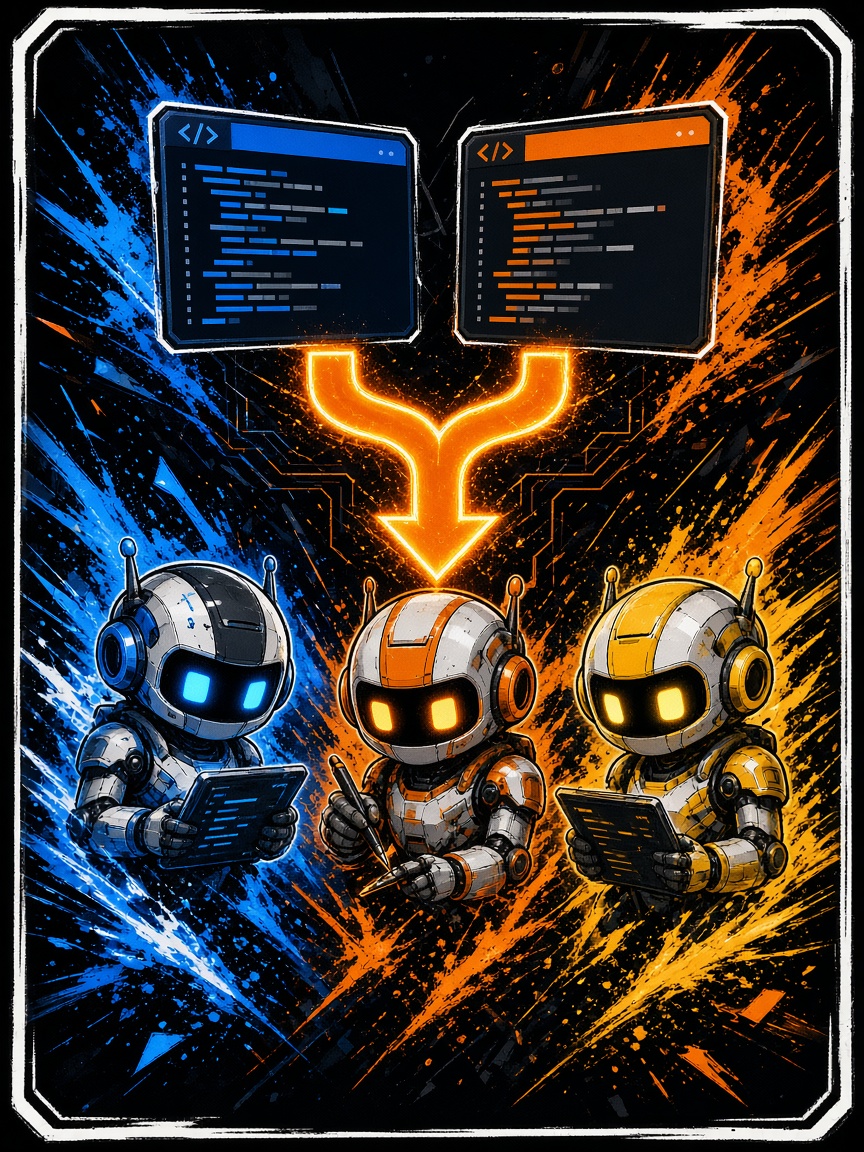
Orchestrated Google Jules as a cloud coding agent against the TrustClarity buyer platform while Claude authored file-scoped prompts with explicit root causes, in-scope and out-of-scope paths, and no-new-dependencies constraints. Each Jules session ran in a short-lived VM — clone, read AGENTS.md, implement, attempt PR — then a human pulled the diff, rejected type suppressions and scope creep, re-committed with a signed commit, opened a signed PR into develop, and closed Jules' unsigned PR. The first run dispatched unit/integration tests as a separate second wave after the fix PRs; the going-forward standard folds tests into the fix session. Prompt discipline also used parallel attempts for ambiguous bugs and single-line task prompts after multi-paragraph dispatch corruption.
TECHNOLOGIES USED
- Google Jules
- Claude
- GitHub
- AGENTS.md
- TypeScript
- React / Next.js
- Algolia
- pnpm
- Jira
Project Details
Why couldn't cloud coding agents merge straight into the buyer platform?
A UAT round on the TrustClarity buyer platform produced 14 test cases. Four failures were bounded, single-layer frontend fixes with clear root causes — registration payload missing a name field, wrong image key in search thumbnails, category slug mismatch between nav and search filters, and seller names leaking on buyer-facing surfaces. Google Jules can implement those kinds of fixes in a cloud VM, but sessions have no live secrets or runtime verification, cannot read Figma, and produce unsigned commits that signed-commit policies reject. Without file-scoped prompts and a human pull-and-re-sign runbook, parallel batches risked scope creep and unreviewable merges.
How were Jules sessions orchestrated safely?
Before any dispatch, AGENTS.md was committed as the contract every cloud session reads first: tech stack, install notes that work in agent VMs (local git hooks break there), ordered pre-PR checks, naming conventions, off-limits paths, ticketed PR title format, and pointers to shared engineering standards.
Prompts named exact in-scope files, files not to touch, and the diagnosed root cause — not just the symptom. When two fixes both needed the shared search module, both sessions were told to read it but not edit it. Ambiguous bugs used parallel attempts; identical diffs across attempts counted as high confidence. Jules cannot read Figma — for design-driven work, Claude translated frames into plain-language layout and reuse instructions before dispatch.
Jules commits are unsigned. The durable runbook is: never merge the agent's PR; pull the diff; verify scope and reject type suppressions, unsafe casts, and lockfile edits; apply on a ticket branch; run checks; create a signed commit with agent co-author credit; open a signed PR; close the unsigned agent PR. That adds about five minutes per fix and keeps the signed chain unbroken. The TypeScript no-suppression rule came from rejecting a cast on the thumbnail fix in favor of structural typing — later reflected in shared standards and AGENTS.md.
What did production runs prove?
The first production run (2026-06-29) produced four signed, hooks-passing merges into develop — AGENTS.md plus registration, category-slug, and seller-privacy fixes. The second UAT round (~17 issues) dispatched four slices to Jules and confirmed design-driven prompts need human-translated Figma context. A later batch confirmed the operating model at scale: 13/13 sessions completed with 0 Jules-authored PRs — diffs were real and on-target; only PR-surfacing failed. Pull-and-re-PR is the durable path. Going forward, tests fold into the fix session instead of a separate second wave, and every tasks-file prompt stays on one physical line after multi-paragraph prompts silently corrupted into empty sessions.
MORE WORK
OTHER CASE STUDIES

TrustClarity: Buyer Portal Rebuild — Search-First TC 2.0 Platform
IMPACT:
400+ Storybook stories across 130+ components (from 11), WCAG 2.1 AA remediation, RFQ flow with server-side credential fix, and 1,533 lines of storefront code removed for a search-first pivot
React/Next.js rebuild of TrustClarity's core buyer workflows — Figma-to-production, WCAG 2.1 AA, Storybook/Chromatic visual gates, and a search-first architecture that replaced the per-org storefront layer.
TrustClarity: Supply-Chain Security Analysis and CI/CD Hardening
IMPACT:
14 of 20 repositories remediated before TrustClarity production; 3 attack vectors eradicated; SHA-pinned reusable security-scan workflow rolled out to 20 repos; later SHA-pin and merge-base invisibility controls shipped
Org-wide supply-chain security analysis for TrustClarity — malicious code found in 14 of 20 repositories across three attack vectors, remediated in repos before it reached TrustClarity's own production environment, followed by a SHA-pinned reusable CI/CD security pipeline and later hardening controls.

TrustClarity: Centralized AI Governance Platform for Multi-Repo Engineering
IMPACT:
Centralized AI governance with ~20 reusable skills, 5 specialized agents, shared sync tooling, Trail of Bits registry growth (10→17), and a 15-repo config-payload forensic scan
Built TrustClarity's centralized AI governance platform — reusable AI skills, specialized agents, shared sync tooling, Trail of Bits skill ingestion, and an in-house config-payload detector used in a 15-repo forensic scan.